



It shapes a vital political and legal foundation to materialize the Party’s major guidelines on cultural revitalization and development. For Điện Biên, a locality converging the distinct cultural identities of 19 ethnic groups, the resolution opens up fresh room to transform cultural resources into development drivers, contributing to the goal of making culture an endogenous strength serving socio-economic development.
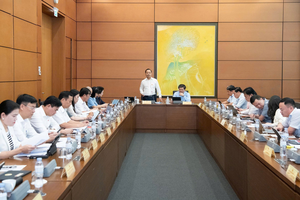
Immediately after the Prime Minister issued Decision No.875/QĐ-TTg dated May 15, 2026, on the Implementation Plan for Resolution No.28, the provincial People’s Committee enacted an execution plan across the province. The plan clearly identifies the goal of synchronously organizing tasks and solutions tailored to local practical conditions. It aims to elevate the awareness of the entire political system and the public regarding the role of culture in socio-economic development, national defense and security assurance, and international integration. Concurrently, it focuses on strengthening the validity and efficiency of state management over culture, preserving and promoting the traditional cultural values of ethnic groups, constructing a healthy cultural environment, and developing human resources in the cultural sector.
A prominent highlight is the requirement for methodical, focused, and prioritized deployment, clearly assigning responsibilities to each agency and unit. The implementation of Resolution 28 is closely linked with Resolution No.80-NQ/TW of the Politburo, Plan No.34-KH/TU of the Standing Board of the provincial Party Committee, alongside the province’s cultural development strategies and programs.
.jpg)
Six focus task groups were identified, including organizing a deployment conference for the resolution, widely propagating and popularizing its contents, and reviewing and perfecting the legal document system. They also encompass professional training and fostering, strengthening inspection and supervision over execution, and conducting preliminary and final reviews to evaluate deployment results. These synchronous solutions aim to build unity running from awareness to action, ensuring the resolution materializes through concrete outcomes.
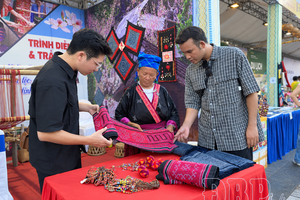
This spirit is being materialized across many localities. As the westernmost land of the Fatherland, converging the unique values of the Hà Nhì ethnic people alongside specific tourism resources like the tripoint border marker, the A Pa Chải flagpole, and pristine mountain landscapes, Sín Thầu commune has opted to develop culture in close association with community tourism, turning identity into a product that serves economic development.
The traditional values of the Hà Nhì people here are being preserved by safeguarding their cuisine, costumes, handicrafts, traditional rituals, festivals, and folk arts. The locality places heavy focus on upgrading the quality of cultural, sports, and tourism activities, step-by-step restoring traditional ceremonies and building real-scene performance programs at specific times of the year to enhance visitor experiences.
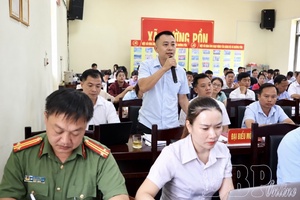
Đỗ Thùy Giang, Vice Chairman of the Sín Thầu commune People’s Committee, noted: “One of the local highlights is maintaining the annual Traditional Tet of the Hà Nhì ethnic group. This stands not only as an occasion for the people to preserve and hand down traditional cultural values through costumes, language, rituals, folk songs, and dances, but also as a space connecting ethnic communities living in the area.”
He added that folk games like tug-of-war, stick pushing, con throwing, pao throwing, and tu lu contribute to enriching the spiritual life of the public while generating a strong appeal for tourists. Through the festival, the image of Sín Thầu’s people, culture, and regional products is widely promoted, step-by-step constructing a destination brand rich in identity.
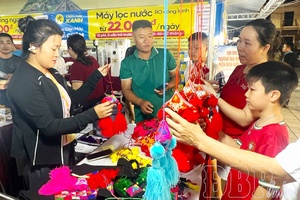
Quài Tở commune is opting for a community tourism development path built on the foundation of the Mông ethnic cultural identity. Lồng village logs 116 households with 552 people, 100 percent of whom are Mông ethnic citizens. Situated around 20 km from the commune center with favorable connections to National Highway 6, the village still retains a pristine natural landscape, a cool climate year-round, and numerous unique traditional cultural traits, shaping favorable conditions to develop community tourism linked with indigenous cultural experiences.
Nguyễn Trung Kiên, Vice Chairman of the Quài Tở commune People’s Committee, stated: “The locality identifies tourism development as a core task to efficiently exploit existing potentials and advantages. The Lồng village community tourism spot officially entered operations at the end of March, and by mid-June, it welcomed 25 delegations with 220 visitor arrivals coming to sightsee and experience.”
The locality is also finalizing criteria to request the recognition of Lồng village as a provincial-level tourist spot, while continuing to invest in infrastructure, spruce up landscapes, upgrade service quality, and build a cohesive destination image.
Resolution No.28/2026/QH16 has opened up a new development phase for the cultural sector, placing culture at the center of the national development strategy. For Điện Biên, proactively enacting a deployment plan, tightly binding it with the province’s resolutions and development programs, and materializing it through practical models is building a solid foundation for cultural values to be continuously preserved, promoted, and transformed into development drivers. This contributes to building a rapid, sustainable, and identity-rich Điện Biên in the new era.
Diệp Chi
.jpg)
.jpg)
.jpg)
.jpg)
.jpg)
.jpg)
.jpg)
.jpg)
.jpg)
.jpg)
You have 500/500 characters left
Please enter 5 or more characters!!!